
Why I still use the camera I have
Photographers can be very good at wanting the next thing. The newest camera body. The sharper lens. The better sensor. The smarter autofocus system. The smaller bag. The lighter tripod. The next piece of gear that promises to remove one more obstacle between what we see and what we hope to make. I understand the pull of that. I feel it too.
A visit to B&H
About a year ago, I was in New York and took myself to B&H Photo. For anyone interested in photography, that can feel a little like walking into the center of the universe. I went in with a real question, not just a wandering curiosity.
Nikon had recently released the Z6III, and it seemed to be getting strong reviews and a lot of positive attention. I had been thinking seriously about whether it might be time to move on from my Nikon D7000, the DSLR body I have used for about thirteen years.
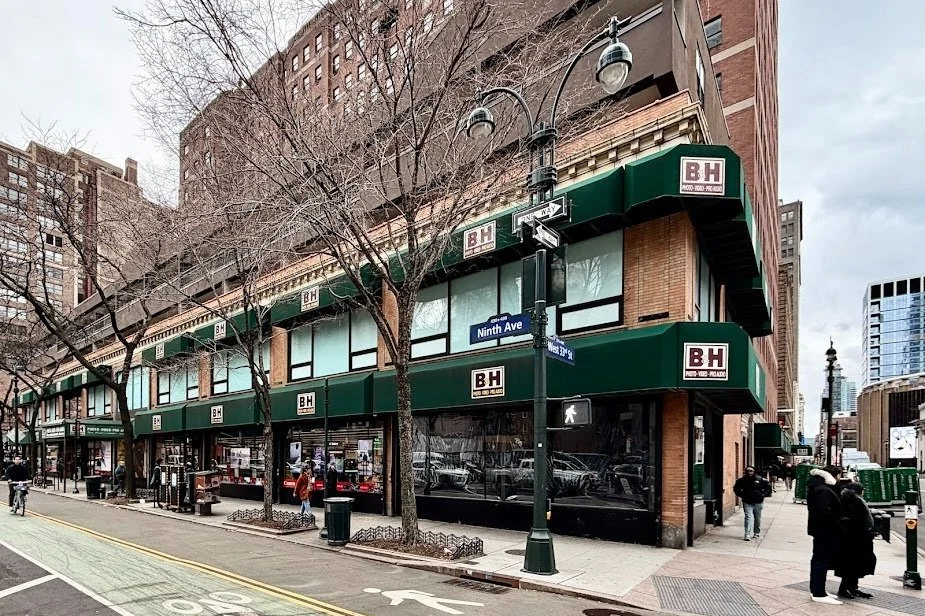
B&H Photo in New York — a place where the tools of photography still feel tangible, specific, and full of possibility.
The D7000 is not a higher-end professional camera. It was not that when I bought it, and it certainly is not that now. But it was the camera I chose when I wanted to get back into DSLR photography after being away from it for a number of years. At the time, it felt like the right balance of quality, capability, and practicality.
Looking back, I think it was the perfect choice.
The honest answer I did not expect
Still, cameras change. Technology changes. Mirrorless systems have become the center of gravity for most camera makers. I knew enough to be curious, but not enough to feel certain. In my mind, that was exactly the right reason to talk with someone who knew more than I did.
I found the Nikon rep and explained where I was. I told him I did not know what I did not know. I was curious about moving to a mirrorless body. I wanted to understand the pros and cons. Most of all, I wanted to know whether replacing my D7000 made sense for the way I actually photograph. His answer, after talking it through, was simple. Not yet.
That surprised me a little, mostly because I had walked into a camera store prepared to be convinced. But he listened carefully. He asked what I photographed, how often I used the camera, how I worked, and what I felt I was missing.
After hearing all of that, he did not tell me the old camera was obsolete. He did not tell me I needed the newest body. He said the Z6III was a terrific camera, and that when I was ready to move into mirrorless, it would absolutely be one to consider. But he also said my D7000 could continue to serve me well. I appreciated that more than he probably knew.
When the thing you own still has value
There is a kind of honesty in being told that the thing you already own still has value. Not because newer gear is unimportant, or because technology does not matter. It does. Better tools can open up real possibilities. They can solve real problems. They can make certain kinds of work easier, faster, or more reliable. But gear should answer a need, not create one.
That is the part I try to remember. The question is not simply whether a newer camera is better. Of course it is better in many ways. The better question is whether it is better for the kind of photographer I am right now.
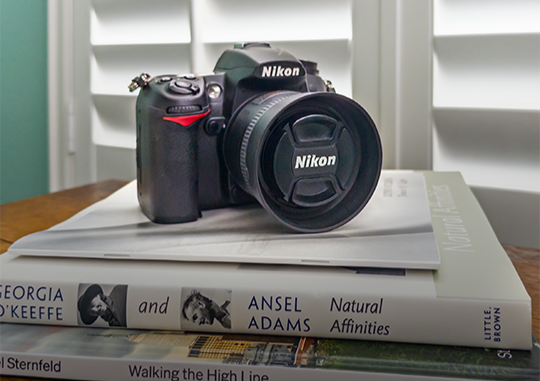
My Nikon D7000, still in use after many years — familiar, capable, and more than enough for the kind of looking I want to do.
The way I actually photograph
Most of my photographs come from walking, noticing, waiting, and responding. I photograph buildings, signs, roadsides, quiet spaces, surfaces, shadows, and traces of use. I am not usually chasing fast action. I am not working in a studio. I am not producing commercial assignments that require the latest autofocus system or the largest files possible. For the way I work, familiarity matters.
I know how my camera feels in my hand. I know where the controls are without thinking too much about them. I know what it can do, and I have learned how to work within what it cannot do. That kind of comfort is not insignificant. It allows the camera to become less of a question and more of a companion.
What limitation can teach
There is also something useful about limitation. A camera that does not do everything for you can ask you to slow down. It can make you pay closer attention to exposure, focus, composition, and timing. That does not make older gear better by default, but it does remind me that photographs are not made by specifications alone. They are made by decisions.
Still an old friend
When I do eventually move to a mirrorless body, I suspect I will love it. I will probably appreciate the lighter system, the improved viewfinder, the newer technology, and all the things I do not yet know I am missing. The Z6III may still be the camera I look at when that time comes. But I do not imagine parting with my D7000.
It has been with me on too many good adventures. It has been on roadsides, in small towns, in cities, in Scotland, in the Southwest, and in places I did not expect to photograph but did. It has helped me make images that still feel important to me. Not because it was the newest or most advanced camera, but because it was the camera I had, understood, carried, and trusted.
That counts for something.
For now
The newest gear will always be tempting. Sometimes it will also be the right next step. But tried and true still has value. Knowing how you work, what you photograph, and what you actually need may be the best guide for deciding where to spend your money.
For now, I am still using the camera I have. And I am still grateful for what it helps me see.
