
The quiet appeal of weathered surfaces and old signs
I’ve always been drawn to places that show their age a little. Faded signs, peeling paint, rusted doors, worn brick, empty storefronts — these are the kinds of details that tend to make me stop and look.
Part of the appeal is visual. Weathered surfaces often have an accidental beauty: colors that have softened over time, letters that are almost gone, textures that no one designed but that somehow feel perfectly composed. A wall might have layers of paint, stains, old lettering, repairs, shadows, and marks from whatever used to be attached to it. All of that becomes part of the image.
But there is also a story there, even when I do not know what the story is.
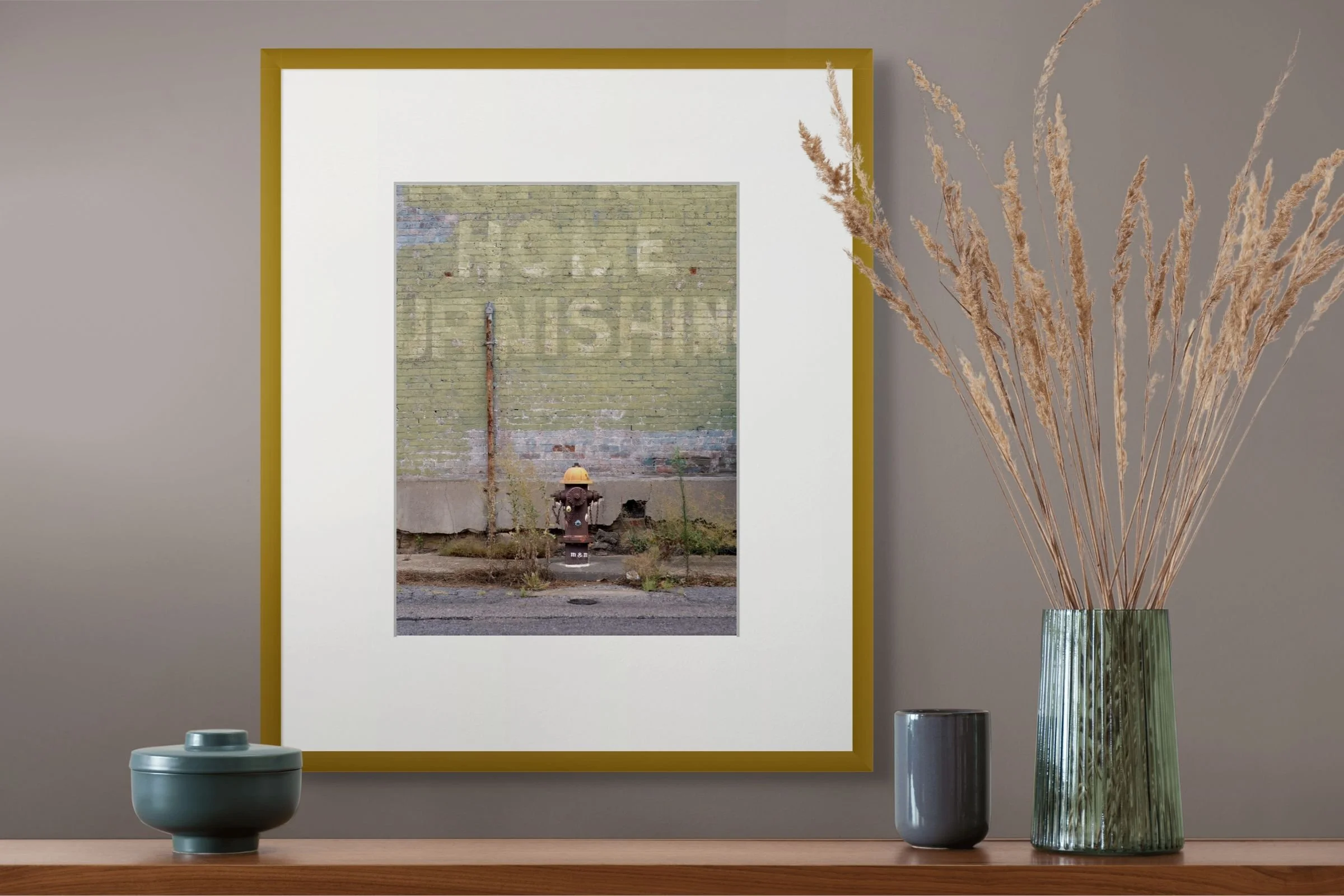
Weathered surfaces often carry the most interesting visual history — layers of paint, type, rust, repairs, and small clues about what a place used to be.
A ghost sign, a locked door, an old storefront, or a rusted frame suggests something that once had a purpose. It may have been a business, a gathering place, a motel, a service entrance, a wall someone walked past every day. The photograph does not have to explain it. In fact, I often like that it doesn’t.
That is the idea behind much of the Traces Left Behind gallery. These are not photographs of abandoned places for the sake of abandonment. They are photographs of what remains visible — color, type, surface, utility, memory, and small signs of use.
In some images, the typography is what pulls me in first. In others, it is the texture or color. Sometimes it is one unexpected object that changes everything: a fire hydrant, a pair of padlocks, an empty frame, a toy car, a sign that is barely still readable.
I like these scenes because they ask for a slower kind of looking. They are not polished, but they have presence. They remind me that places can keep speaking, even after their original purpose has faded.
Several photographs from Traces Left Behind are available as made-to-order prints in the Print Shop.
